Durability Supports Lower Lifecycle Cost
Initial material and installation costs occur once. Inspection, maintenance, rehabilitation, replacement, and the disruption associated with additional construction may continue throughout a product's service life. Service life must be part of any meaningful cost comparison.
The lowest upfront cost may not deliver the lowest lifecycle cost. When evaluating underground infrastructure, initial cost is only part of the equation. The real measure of value is how long a pipe remains in service, how often it requires repair or replacement, and how much disruption it creates over its full lifecycle. Infrastructure expected to serve communities for generations should be evaluated beyond installation day.
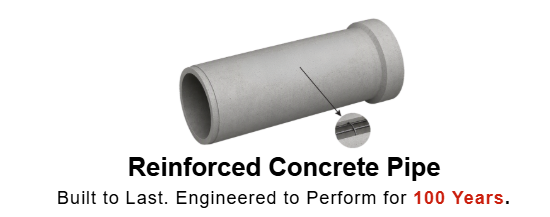
Reinforced concrete pipe is built to last and engineered for long-term performance, with a service life of 100 years or more when properly designed, installed, and maintained.
Performance Doesn't End at Installation
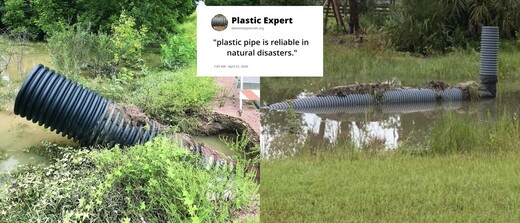
Pipe selection often begins with structural strength requirements, but long-term value is determined by how pipe performs over decades of service. Infrastructure must withstand traffic loading, environmental exposure, changing soil conditions, and unexpected events like fires and floods throughout its service life.
Reinforced concrete pipe is engineered to provide structural strength and durability in demanding environments, helping infrastructure systems continue performing through changing site conditions and the realities of long-term

Fewer Replacements Mean Less Disruption
Every repair or replacement project creates costs that extend beyond construction budgets. Road closures, traffic delays, utility interruptions, equipment mobilization, and labor requirements can all affect communities and project stakeholders.
Because reinforced concrete pipe is designed for long service life, owners can benefit from:
- Fewer replacement projects
- Reduced need for major repairs
- Less traffic disruption
- Fewer maintenance interventions
- Longer use of the original infrastructure asset
Durable concrete infrastructure can help reduce the frequency of repairs, replacements, and major reconstruction activities. By extending service life, reinforced concrete pipe helps preserve the value of the original installation while allowing owners to allocate resources toward future improvements rather than recurring rehabilitation or replacement projects. For municipalities, developers, and engineers, durability is not simply a performance characteristic. It can influence traffic management, inconvenience to the public, project scheduling, and long-term infrastructure planning.

100 Year Service Life Protects Infrastructure Investments
According to industry research, properly designed, installed, and maintained reinforced concrete pipe can provide a service life of 100 years or more. Infrastructure constructed today can serve communities for generations while continuing to provide value from the original investment.
For owners, engineers, and municipalities, long service life is more than a performance metric. It reflects the ability to build infrastructure intended to support communities well into the future.

Build for Generations
A service life measured in generations changes the way infrastructure value should be evaluated. When assets are expected to perform for 100 years or more, durability and long-term performance become just as important as initial cost. Reinforced concrete pipe helps communities invest in infrastructure built to serve both today's needs and tomorrow's.
Explore facts about service life, durability, and lifecycle value: Concrete Pipe Facts