Rigid and Flexible Pipe Carry Loads Differently
Underground pipe must withstand loads from soil cover, traffic, and other site conditions. But not every pipe material resists loads in the same way.
Reinforced concrete pipe (RCP) carries structural loads through its concrete wall and steel reinforcement. Flexible pipe relies more heavily on surrounding soil and the quality of field installation to resist loads and control deformation. Both approaches require proper design and installation. The key difference is how each pipe material carries structural loads and the role the surrounding soil plays in supporting the pipe.

Rigid vs. Flexible Pipe
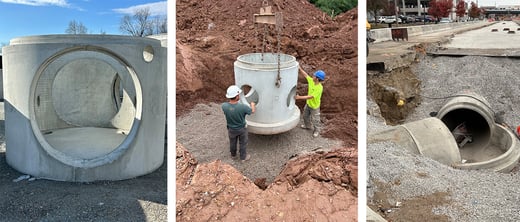
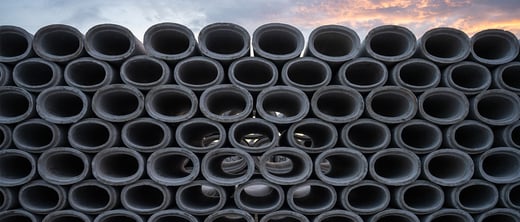
RCP, or rigid pipe, is designed to resist external loads through its rigid cross-section. Concrete provides compressive strength, while steel reinforcement helps resist tensile stresses. Together, these materials allow RCP to resist deformation and maintain its intended shape under heavy loads. Its structural strength comes from the pipe itself, with concrete and steel reinforcement designed to carry the required loads.

Verified Structural Performance
RCP is manufactured to defined strength criteria and tested under controlled loads before reaching the jobsite. This gives engineers measurable evidence that the pipe meets specified strength requirements before installation.
ASTM C76, Standard Specification for Reinforced Concrete Culvert, Storm Drain, and Sewer Pipe, establishes requirements for RCP, including strength classifications and external-load testing. The three-edge-bearing test evaluates a pipe's ability to withstand specified loads under controlled conditions.
Standardized testing and manufacturing quality control verify that the pipe meets specified requirements before installation, while project specifications and construction inspection address proper application and installation in the field.
Together, they provide documented checks on product quality, structural requirements, and field installation.

Soil Conditions and Installation Matter
Underground conditions can vary significantly from one project to another. All buried pipe require proper installation, but soil and installation conditions play different roles depending on the type of pipe selected.
Flexible pipe relies significantly on the surrounding embedment to provide structural support. Inadequate compaction, unsuitable backfill, or unexpected soil conditions can affect that support and contribute to excessive deformation. Variables such as soil characteristics, groundwater, trench geometry, cover depth, traffic loading, and compaction can affect installed performance.
RCP also requires proper bedding, backfill, and installation. However, RCP provides a rigid structural section that carries loads through the pipe itself, without relying on surrounding soil as the primary means of maintaining its shape. Its rigidity supports dimensional stability under specified loading conditions.
Every buried pipe system requires proper installation. The distinction is that flexible pipe depends more heavily on the installed soil structure to control deformation, while RCP provides a rigid structure designed and tested to withstand specified loads. Where soils, construction access, compaction, or other field conditions may be difficult to control, that difference deserves careful consideration during material selection.
Evaluate the Complete Structural System
Pipe selection should account for anticipated loads, soil conditions, cover depth, installation requirements, applicable specifications, and how product performance will be verified.
Both rigid and flexible pipe can meet project requirements when properly designed and installed. The important distinction is how each system carries loads. RCP combines a rigid concrete section, steel reinforcement, defined manufacturing requirements, and standardized strength testing. Flexible pipe relies more heavily on the surrounding soil and field installation to provide structural support and control deformation.
Understanding those differences helps engineers and contractors select pipe based on the project’s design requirements, site conditions, and expectations for long-term performance.
Compare Rigid vs. Flexible Performance: https://www.countymaterials.com/pipe-and-underground-infrastructure/reinforced-concrete-pipe/facts
Related Content Links: