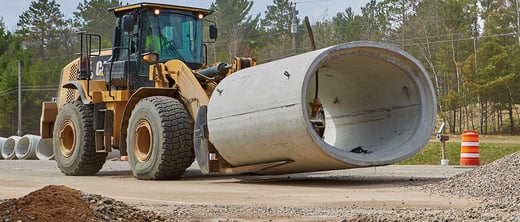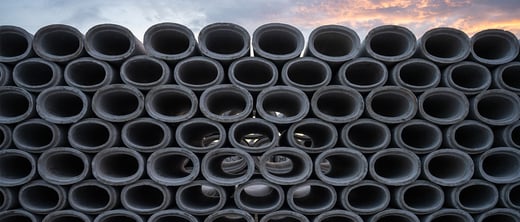
How Precast Wet Utility Structures and Concrete Pipe Work Together
Stormwater, sanitary, and site-drainage systems depend on more than the performance of individual components. Inlets, catch basins, manholes, junction boxes, and connecting pipe must be coordinated as an underground system, with structure dimensions, pipe openings, elevations, connection details, and loading requirements aligned with project plans and specifications.
Precast concrete structures can simplify this coordination because components are manufactured to defined dimensions before arriving at the job site. When properly specified and installed, compatible structures and concrete pipe can reduce field adjustments and support efficient installation.
Produced in controlled plant environments before being transported to an installation site, precast concrete "combines the strength and durability of concrete with the precision and efficiency of manufacturing," according to the National Precast Concrete Association (NPCA). This production approach supports consistent quality and allows structures to be produced to defined project requirements before installation begins.
Before selecting individual structures, project teams typically evaluate how stormwater or wastewater will be collected, conveyed, accessed, and maintained throughout the drainage system. Those decisions influence the type, size, location, and connection requirements of inlets, catch basins, manholes, and junction boxes, as well as the pipe network connecting them.
What Role Does Each Wet Utility Structure Serve?
Precast drainage structures are available in a range of standard and project-specific configurations. Their dimensions, openings, connection details, and elevations are coordinated with the drainage-system design and connecting pipe. Each structure serves a different purpose within that system.

Inlets
Precast concrete inlets help control surface flows and reduce water accumulation in streets, parking lots, and landscaped areas. They capture runoff at the surface through grates or curb openings and divert it underground, into the drainage system.
Catch Basins
Concrete catch basins are underground structures that collect stormwater and provide a sump where sediment and debris can settle before flow continues through the drainage system. Designers may specify catch basins where runoff may carry sediment, debris, or other materials into the drainage system. Their sump area allows heavier particles to settle before water continues downstream through the pipe network. NPCA offers technical guidance on specifying precast concrete catch basins and inlets.
Manholes
Precast concrete manholes provide access for inspection and maintenance of underground stormwater and sanitary sewer systems. Traditional precast manholes are assembled from components that may include a base, riser sections, top slab or cone, adjusting rings, and a frame and cover. The configuration, pipe penetrations, elevations, and other details are coordinated to meet project requirements.
Newer manufacturing technology also allows the manhole base to incorporate more complex project-specific features before it reaches the job site. County Materials' Prima Base™ Monolithic Manhole Base, for example, uses single-pour construction with channels, inlets, outlets, and variable elevations manufactured to project-specific dimensions and locations. Precision-milled inverts and 3D-designed channel geometry reduce the field shaping traditionally required to form flowlines, helping minimize onsite adjustments.
Both approaches allow project teams to configure precast manholes around the system's pipe layout, access needs, elevations, loading requirements, and applicable project specifications.

Junction Boxes
Precast junction boxes are enclosed structures that connect multiple pipes within complex or challenging underground drainage systems. They are frequently used where multiple pipe runs converge, where significant directional changes occur, or where drainage-system geometry requires a configuration that differs from a standard manhole. They enable directional changes and system branching while providing durable, secure access points for inspection and maintenance. Typical options include steps, boots, flowlines, and adjusting rings, which can be configured to meet specific project requirements.
How Wet Utility Structures Function as a System
Each structure performs a different task, but drainage-system performance depends on how the components operate together. Inlets collect surface runoff. Catch basins can capture sediment and debris. Junction boxes accommodate pipe intersections and changes in direction. Manholes provide access for inspection and maintenance. Reinforced concrete pipe conveys flow between those structures.
For the system to function as designed, project teams must coordinate structure dimensions, pipe sizes and orientations, opening locations, invert elevations, flowlines, connection types, joint requirements, loading conditions, and maintenance access before fabrication and installation.
What Must Be Coordinated Before Fabrication?
Compatibility depends on coordinated connection details. Opening size and location must accommodate pipe OD, entry angle and structural requirements. Connections also need a specified sealing approach. A soil-tight connection is not automatically a watertight connection.
Connection and sealing requirements
NPCA explicitly states that drainage/sewage networks may require soil-tight or watertight performance depending on application. The NPCA’s guide to grouted concrete-to-concrete connections explains these distinctions for reinforced concrete pipe connections to precast structures. Connection materials and installation details should follow the project requirements and manufacturer recommendations.
Elevations and flowlines
Elevation is another aspect of the fit. Pipe connection sizes and elevations, along with the structure location and elevation, need to be coordinated with the project drawings before fabrication. A municipal manhole specification, for example, requires these details in shop drawings. Reviewing them together helps the project team confirm that the proposed structure and its incoming and outgoing pipes match the planned layout.
Loading and site conditions
Physical fit alone, however, does not establish suitability for the application. Burial depth, vehicle loading, soil pressure, and groundwater conditions affect structural requirements. Applicable requirements vary by project and jurisdiction. Depending on the structure and connection type, specifications may reference standards such as ASTM C478 for precast reinforced concrete manhole sections, ASTM C923 for resilient pipe-to-manhole connectors, ASTM C990 for joints using preformed flexible sealants, and applicable AASHTO or state DOT requirements. Project teams should verify the requirements identified in the governing plans and specifications.
For County Materials’ Wet Utility Structures and connecting pipe, the project team should confirm that the selected components, connection details, and installation requirements align with the governing plans and specifications. Performance depends on both the specified design and proper installation.
How Coordinated Wet Utility Systems Apply to Real Projects
According to the American Concrete Pipe Association (ACPA), concrete drainage systems have been installed extensively around the world, demonstrating concrete’s reliability and longevity. The following are just a few examples of successful drainage systems that incorporate wet utility structures.
IndyGo Blue
The new bus rapid transit, or BRT, line that runs through downtown Indianapolis, Indiana, provided the city with an opportunity to overhaul and update the large underground drainage system beneath the route. The project team specified precast concrete wet utility structures from County Materials, including junction boxes and manholes, as well as reinforced concrete pipe.

Stillwater Road
When Stillwater Road, which passes through Mahtomedi and Willernie, Minnesota, needed to be reconstructed, the project team installed a stormwater solution that would support heavy traffic while meeting a tight construction schedule. They specified County Materials' Prima Base™ Monolithic Manholes manufactured to project-specific elevations and connection requirements, helping reduce field fabrication and supporting planned installation sequencing.
DOT #3 I-43 Project
The WisDOT modernized the I-43 North-South freeway, which runs from Glendale to Grafton, Wisconsin, to create a safer, more efficient road. The planners chose a wide range of wet utility structures for structural integrity and resilience. During most of one construction season, County Materials delivered precast components to the project each day, illustrating the importance of production and delivery coordination on large infrastructure projects.
Coordinate Wet Utility Structures Around the Application
Selecting wet utility structures means matching the components to the application—not just choosing products that fit together. Confirm that pipe openings, connection seals, elevations, and loading requirements align with the governing plans and specifications.
Before finalizing structure selection, project teams typically evaluate:
- System function and flow requirements
- Pipe sizes, locations, and entry angles
- Structure dimensions and configuration
- Invert elevations and flowlines
- Connection and sealing requirements
- Traffic and structural loading
- Soil and groundwater conditions
- Inspection and maintenance access
- Installation and delivery sequencing
County Materials manufactures reinforced concrete pipe along with precast inlets, catch basins, manholes, and junction boxes, giving project teams a single source for multiple components within an underground drainage system. Coordinating structures and pipe through one supplier can simplify communication around dimensions, openings, elevations, connection requirements, production, and delivery. Final component selection and performance remain dependent on the project's design, specifications, site conditions, and installation.
Planning a stormwater, sanitary, or site-drainage system? Contact County Materials’ Customer Service Team at (708) 562-7700 to discuss precast wet utility structures and reinforced concrete pipe for your project’s plans and specifications.