Concrete Infrastructure Matters in Wildfire-Prone Areas
Wildfire events highlight an important question for infrastructure owners and engineers: how will drainage materials perform when exposed to extreme heat and fire? According to the Federal Highway Administration (FHWA), wildfire temperatures can exceed 2,000°F, creating conditions capable of damaging roadways, culverts, bridges, drainage systems, and other transportation assets. Wildfires can also trigger secondary hazards such as flooding, erosion, and debris flows, creating long-term challenges long after the fire is contained.
One of the most vulnerable components of transportation infrastructure is the drainage network beneath and alongside roadways. FHWA research found that plastic pipe materials such as HDPE and PVC are susceptible to melting during wildfires, potentially leading to structural failure and roadway instability. The agency also suggests that fire-resistant materials such as concrete should be considered in wildfire-prone areas, with some municipalities replacing damaged HDPE culverts with concrete alternatives following wildfire events.

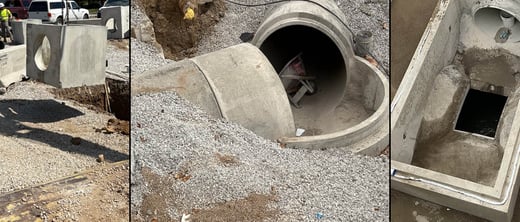
County Materials manufactures a variety of precast concrete infrastructure products that help transportation agencies improve resilience before, during, and after wildfire events, including reinforced concrete pipe (RCP), box culverts, catch basins, manholes, stormwater management structures, retaining walls, and bridge components. FHWA research indicates that concrete pipe generally provides greater fire resistance than HDPE and PVC pipe alternatives, making it a preferred choice for critical infrastructure.
Beyond fire resistance, concrete infrastructure plays a critical role in managing post-fire conditions. Wildfires often remove vegetation and destabilize soil, increasing the likelihood of erosion, flooding, and debris accumulation. These conditions can overwhelm drainage systems and accelerate infrastructure deterioration. Durable precast drainage and stormwater infrastructure helps maintain water flow, reduce erosion impacts, and support effective stormwater management when transportation networks are under stress.

Building Resilient Transportation Infrastructure for the Future
As transportation agencies evaluate infrastructure investments, resilience is becoming an increasingly important design consideration. While initial construction costs remain important, owners must also consider lifecycle performance, maintenance requirements, and the ability of infrastructure assets to withstand extreme environmental conditions.
County Materials’ precast concrete infrastructure offers several advantages in these applications. Concrete is inherently noncombustible, maintains structural integrity under elevated temperatures, and provides the long service life required for critical transportation corridors while reducing long-term maintenance demands.
By incorporating durable precast concrete infrastructure into transportation projects, agencies can better prepare for both direct wildfire impacts and the environmental challenges that often follow.

Explore County Materials' precast concrete infrastructure solutions to help build resilient transportation networks that perform through wildfire, flooding, and other environmental challenges: https://www.countymaterials.com/pipe-and-underground-infrastructure
-1.jpg?width=520&height=294&name=2026%20CMC%20Concrete%20Pipe%20Week%20Video%20Article%20(1)-1.jpg)