The True Test of Infrastructure
The true test of infrastructure isn't the day it's installed; it's the day everything goes wrong.
Extreme weather and emergency events place enormous demands on drainage systems. While resilience planning often focuses on visible infrastructure, buried stormwater systems play a critical role in keeping communities functioning. When a drainage structure fails, the impacts can extend beyond the pipe itself, affecting roadways, property, emergency access, and public safety.

Building for Extreme Conditions
Major weather events can challenge drainage systems with flooding, erosion, debris, changing soil conditions, and elevated groundwater. Infrastructure must continue performing when communities need it most.
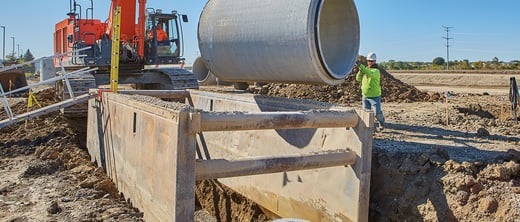
Reinforced concrete pipe (RCP) is designed to maintain structural performance under demanding conditions. Manufactured and tested to ASTM standards, RCP provides inherent structural strength that helps support roadways, utilities, and other critical infrastructure before, during, and after extreme weather events.
By maintaining structural performance under heavy leads, soil movement, flooding and sever weather, RCP can help reduce roadway closures, costly repairs, service disruptions, and impacts on community safety.
The Cost of Infrastructure Failure
A failed drainage structure can affect more than the drainage system itself. Drainage systems support transportation routes, emergency response operations, evacuation corridors, and essential public access. Roadway closures, restricted emergency response access, flooded transportation corridors, costly emergency repairs, and delays in community recovery can all result when buried infrastructure fails to perform as intended
Performance Under Pressure
Buried drainage infrastructure must withstand more than the weight of the surrounding soil. Depending on its location and application, a pipe may also experience traffic loads, changing soil conditions, groundwater, and other forces.
RCP combines concrete strength with embedded steel reinforcement to provide structural capacity and inherent rigidity that help maintain its shape under these demanding conditions. Its rigid structure helps resist deformation as surrounding conditions change, while its structural capacity supports the pipe and the infrastructure above it. This is particularly important beneath high-volume roadways, critical transportation corridors, emergency response routes, and evacuation routes.

Weight and Stability Matter During Flooding
Flooding and elevated groundwater can introduce significant forces on buried infrastructure. During major storm events, buoyant forces can cause buried infrastructure to move or float.
The density and weight of RCP helps resist uplift forces, supporting system stability during high-water conditions. Unlike lighter-weight alternatives, RCP's inherent mass helps reduce the risk of unwanted movement during flooding events.

Wildfire Resilience Starts Underground
Wildfires are an increasing threat to transportation infrastructure, creating risks not only from direct fire exposure but also from post-fire flooding, erosion, and drainage failures.
According to the Federal Highway Administration's Impacts of Wildfires on Highway Assets, wildfires have damaged roads, bridges, and drainage systems while increasing the potential for severe flooding after a fire. Resilient infrastructure can help reduce washouts, service disruptions, emergency replacement costs, and impacts to community access and emergency response.
Because RCP is noncombustible and fire resistant, it does not contribute fuel to a fire or melt under extreme heat. Its strength and durability help support drainage performance during and after wildfire events, including post-fire flooding and erosion.

Protecting Critical Infrastructure
Resilient infrastructure must continue performing when conditions are at their worst. From flooding and heavy loading to wildfire and post-disaster recovery, drainage systems play a critical role in protecting transportation networks, emergency access, and the communities that depend on them.
Manufactured and tested to ASTM standards, reinforced concrete pipe provides the structural reliability needed to support long-term performance when infrastructure is challenged most.
Get the Facts About Infrastructure Resilience: Explore the RCP Resource Center
References
- Federal Highway Administration, Impacts of Wildfires on Highway Assets (FHWA-HRT-26-005): https://highways.dot.gov/sites/fhwa.dot.gov/files/FHWA-HRT-26-005.pdf
- American Concrete Pipe Association (ACPA), Fire Resilient Infrastructure
https://9491265.fs1.hubspotusercontent-na1.net/hubfs/9491265/Resources/ACPA/Key-Issue-Statements/ACPA-KIS-Fire-Resilient-Infrastructure-CPKSGN002-1.pdf - American Concrete Pipe Association (ACPA), Concrete Pipe Resilience and Sustainability Report
https://resources.concretepipe.org/hubfs/Resources%20%28non-image%29/ACPA/Reports/ACPA-Resilience-and-Sustainability-Report-CPWPGN002-1.pdf?hsLang=en